

If you are comparing materials for a low-slope building, you may ask: what is a TPO roof? It is a reinforced synthetic membrane that keeps water out. This roofing option suits many commercial properties and some home additions, provided the entire assembly drains and is installed correctly.
The Essentials at a Glance
- TPO stands for thermoplastic polyolefin, a flexible membrane used on low-slope buildings.
- Adjacent sheets are joined with hot-air welding rather than relying on sealant alone.
- White membranes reflect sunlight, although the energy benefit depends on the building and climate.
- Common nominal membrane thicknesses include 45, 60, and 80 mil.
- Drainage, flashing, and seam quality matter as much as the membrane itself.
- A lifespan of 15 to 30 years is possible, but never guaranteed.
What Is a TPO Roof Made Of?
TPO roofing is a modern membrane made from polypropylene and ethylene-propylene rubber compounds around a reinforcing scrim. This single-ply roofing membrane comes in rolls whose overlapping edges are fused with hot air.
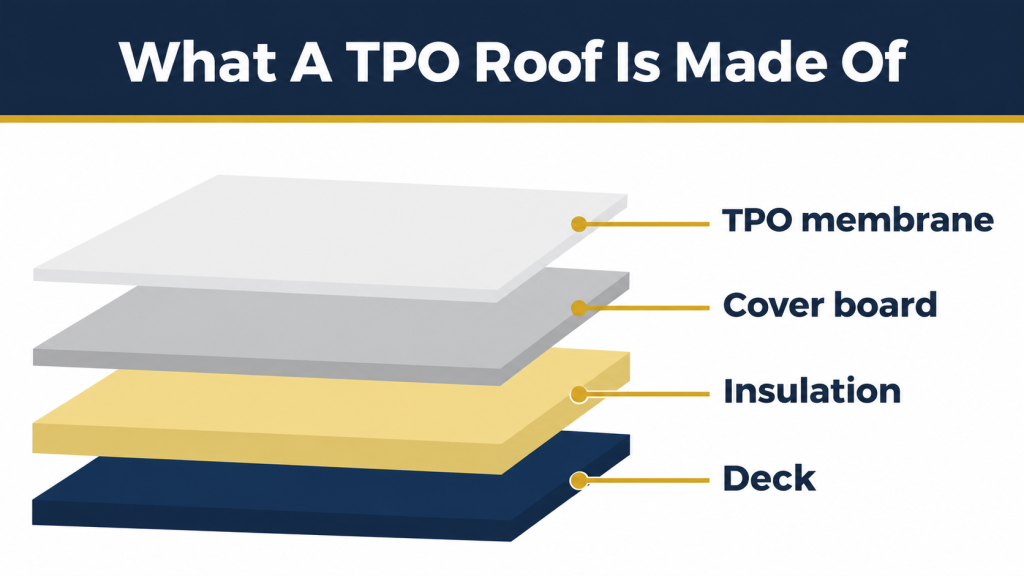
TPO roofing forms a single-layer roofing system at the waterproofing surface, but other components matter: deck, insulation, optional vapor-control layer, cover board, and approved attachment. Insulation provides thermal resistance; the sheet keeps out weather.
Why Commercial Buildings Choose This Material
TPO roofing offers relatively low weight, welded seams, and reflective options. White TPO reflects more sunlight than a dark membrane. The U.S. Environmental Protection Agency’s explanation of cool roofs shows how solar reflectance can reduce heat transfer into buildings.
Energy efficiency gains vary. An air-conditioned warehouse may benefit more than a shaded building in Puyallup, while reflective roofing can reduce beneficial winter solar heat. Consider year-round energy use, not color alone.
How Is TPO Roofing Installed?
A sound roofing installation begins with checking deck damage, moisture, drainage, and insulation. The crew then prepares the substrate and secures sheets through a manufacturer-approved adhered or mechanically attached method suited to wind requirements.
Next come hot-air welding at overlaps, detailed flashing around drains and equipment, and secure perimeter edges. The Roofing Contractors Association of British Columbia’s TPO standard emphasizes clean, dry seams and checking welds for a consistent bond. Good roofing installation work also addresses skylights, parapets, vents, and wall transitions.
Practical Tip: Ask How the Installer Will Test Welded Seams and Manage Water at Drains. A Good Membrane Cannot Make Up for Poor Detailing.
Why Drainage Matters in Rainy Western Washington
With TPO roofing on flat roofs, drainage problems can be more damaging than membrane selection. Leaves block drains, low spots hold water, and foot traffic near HVAC equipment can puncture the surface. A small flashing defect can soak insulation beneath intact-looking roofing.
Watch for persistent puddles, loose flashing, open seams, punctures, and ceiling stains. The National Roofing Contractors Association’s guidance on ponding water warns that water remaining beyond 48 hours can damage the assembly, even though brief ponding may be normal. Arrange a professional inspection rather than walking a wet or unfamiliar roof.
In Pierce County, clear seasonal debris from drainage paths. Replacing a membrane without fixing persistent ponding can repeat the problem.
How Long Does TPO Roofing Last, and What Affects Cost?
A TPO system may last 15 to 30 years, depending on formulation, workmanship, drainage, and maintenance. That range is not a warranty. Anyone asking “what is a TPO roof?” should also ask what is underneath it.
Membrane thickness is only part of the answer. A 60-mil sheet is nominally 0.060 inch thick, but its weather-facing coating over the reinforcing scrim is thinner. The International Institute of Building Enclosure Consultants’ technical advisory explains why 60- and 80-mil membranes may be favored over lighter alternatives for some projects.
| Cost Factor | What to Check Before Accepting a Quote |
|---|---|
| Membrane selection | Manufacturer, 45-, 60-, or 80-mil thickness, and warranty coverage |
| Existing conditions | Whether wet insulation or damaged decking must be removed |
| Roof layout | Drainage changes, penetrations, flashing, and roof access |
| Attachment and insulation | Fastener or adhesive method, cover board, and required insulation level |
Costs vary by project: a wide-open warehouse needs less detailing than a small roof with many vents. Request roofing estimates that separate materials, removal, drainage corrections, and labor so the total cost is clear.
Worth Knowing: “60 Mil” Describes Nominal Membrane Thickness, Not Insulation Value. More Sheet Thickness Does Not Replace Proper Drainage or a Sound Substrate.
TPO vs. EPDM vs. PVC: Which Works Best?
No option wins every time. TPO has welded seams and reflective colors. EPDM is synthetic rubber usually joined with tapes or adhesives. PVC also has welded seams and may suit some grease-exposed buildings.
When comparing TPO roofing with EPDM or PVC for a commercial property, assess the whole roofing system. Consider foot traffic, insulation, drainage, and approved detailing. Lower material cost means little if a design is unsuitable.
Evaluating a Low-Slope Roof Locally
Puyallup Roofing serves homeowners and businesses across Western Washington with roof replacement, repair, and gutter services. A useful roofing assessment looks at leaks, drainage, and whether a single-ply option fits. If considering TPO roofing, confirm which systems and warranties the team currently offers.
Founded in 2023 by Scott Huseby and Josh Massey, the company emphasizes clear explanations and no-pressure estimates. Josh brings over 25 years of work in shingle, metal, flat, and commercial roofing.
Why Property Owners Choose Puyallup Roofing
- Licensed, bonded, and insured in Washington, with contractor license PUYALRC777CL.
- More than 50 years of combined roofing expertise reported on the company website.
- Leadership experience with flat-roof repairs as well as residential and commercial work.
- Owens Corning Platinum Preferred Contractor recognition for its broader roofing work.
- Roof replacement, repair, and gutter services available through one local company.
- Free, no-obligation estimates and a 4.8-star Google rating from 77 reviews displayed on its website.
Discuss Your Roofing Options With a Local Contractor
For a home addition in Puyallup or a business in Tacoma, Sumner, or Bonney Lake, a site-specific assessment is the starting point. The company serves Pierce, King, and Thurston counties. Request a free, no-obligation estimate to discuss the existing roof, available materials, and a practical repair or replacement plan.
Frequently Asked Questions
Can TPO Be Used on a House?
Yes, TPO can be considered for low-slope residential sections, including some garages and additions. It is generally not a direct substitute for shingles on a steeply pitched roof.
Can a New Membrane Go Over an Old Roof?
Sometimes, but only when the existing assembly and local requirements permit a recover. Wet insulation, damaged decking, excess layers, or incompatible materials can make removal necessary.
Can Membrane Punctures Be Repaired?
Yes, localized punctures or damaged seams can often be repaired by a qualified contractor. Widespread membrane deterioration or trapped moisture may call for replacement.
Can Roofing Installation Continue in Rain?
Installation requires properly prepared, dry conditions at seams and substrates. Contractors need suitable weather windows and temporary protection if work must stop.
What Is a TPO Roof’s Best Maintenance Schedule?
Spring and fall checks are a useful baseline, with extra inspections after storms. Keep drains clear and arrange repairs for suspect seams or flashing.