

How long does it take to replace a roof? Most residential asphalt-shingle roofs take approximately 1 to 3 working days to replace. A simple roof may be completed in one day, while larger homes, complicated rooflines, or damaged decking can extend the timeline.
For homeowners in Puyallup, Washington, the weather adds another consideration. Rain, moisture, and changing forecasts can affect when roofing crews begin and how quickly they finish. Understanding the full process helps you plan without rushing work that protects your home.
What Should You Expect Before Your Roof Replacement?
Here are six things worth knowing before scheduling:
- Most straightforward asphalt-shingle roofs take 1 to 3 working days.
- Metal roofing generally takes longer because panels and flashing require additional precision.
- Steep slopes, multiple valleys, and damaged decking can add extra days.
- Material delivery, permits, and contractor availability affect the starting date.
- Rain and unsafe conditions may temporarily interrupt roofing work.
- Final cleanup, inspections, and any necessary corrections are part of completing the job.
How Long Does It Take to Replace a Roof With Different Materials?
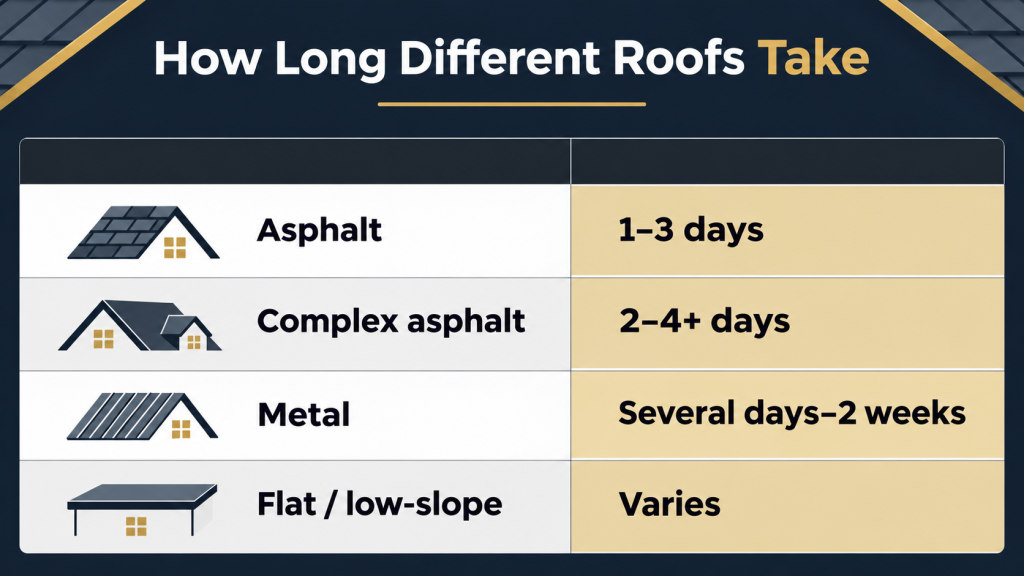
The roofing materials you choose can make a significant difference. Asphalt shingles generally install faster than metal systems, while specialized low-slope roofs require different methods.
| Roof Type | Estimated Working Time | Main Considerations |
|---|---|---|
| Standard asphalt shingles | 1–3 days | Roof size, access, decking condition |
| Complex asphalt-shingle roof | 2–4 days or longer | Steep slopes, valleys, multiple levels |
| Residential metal roofing | Several days to 2 weeks | Panel layout, flashing, roof complexity |
| Flat or low-slope roofing | Varies by system | Membrane type, insulation, drainage |
These are general planning ranges, not guaranteed completion dates.
A home’s square footage alone does not determine installation times. A small roof with several dormers, chimneys, and intersecting slopes may take longer than a larger roof with a straightforward design.
Why Can Scheduling Take Longer Than the Actual Roofing Work?
There are two different timelines to consider: the time before construction begins and the days spent working on your roof.
Before the project starts, your contractor needs to inspect the existing system, measure the roof, prepare an estimate, confirm your selected materials, and coordinate delivery.
The permitting process may also affect scheduling. Certain roofing projects require municipal approval before construction begins.
Contractor availability matters as well. During busy seasons or following major storms, crews may already have several projects scheduled.
Practical Tip: Ask for two dates: your expected starting date and the estimated number of working days. A one-day roof job does not necessarily mean next-day availability.
What Factors Can Delay Roof Replacement?
Even with a confirmed schedule, several conditions can change the timeline.
Roof Size and Design Complexity
A larger roof generally requires more materials, labor, and cleanup. However, design complexity can have an even greater impact.
Roofing around dormers, skylights, chimneys, valleys, and ventilation pipes requires additional cutting, sealing, and flashing. Steep slopes can also slow progress because crews must work with appropriate fall protection and access equipment.
Hidden Damage Beneath Existing Shingles
Contractors cannot always assess every section of decking until the old shingles have been removed.
Rotten plywood, deteriorated underlayment, or damaged flashing must be addressed before the new roofing system is installed.
If you’re asking how long does it take to replace a roof when hidden damage is possible, allow some flexibility beyond the original estimate.
Weather Conditions in Western Washington
Wet weather is a significant scheduling concern around Puyallup, Tacoma, and nearby communities.
Contractors should monitor the National Weather Service’s Seattle/Tacoma forecasts before scheduling tear-off work.
Rain can interfere with proper adhesion, create slippery surfaces, and expose roof decking to moisture. Cold weather can also affect how certain roofing products are applied.
The safest approach is to plan around suitable conditions rather than rushing an installation before an approaching storm.
Roof Access and Safety Requirements
Limited driveway access, landscaping, nearby structures, and steep pitches affect how efficiently materials and debris can be moved.
The Occupational Safety and Health Administration’s residential fall protection guidance explains why appropriate safety systems are necessary during elevated construction work.
These precautions may affect the schedule, but they should never be skipped to finish faster.
What Happens During the Roof Installation Process?
A typical asphalt-shingle replacement follows several stages.
Day One: Preparation and Tear-Off
The crew prepares the property, protects vulnerable landscaping, arranges debris collection, and removes existing roofing materials.
Once the old covering is removed, the exposed decking can be inspected for moisture damage, rot, and structural concerns.
Decking Repairs and Weather Protection
Damaged plywood or other unsuitable decking is replaced before new underlayment is applied.
Waterproofing components, drip edges, and flashing details are then prepared according to the selected roofing system.
Particular attention goes to roof-to-wall connections, including areas where flashing meets siding.
Installing the New Roof
The team installs the selected shingles or other materials, completes roof penetrations and ventilation details, and finishes ridge and edge components.
The exact sequence depends on the roofing system and manufacturer requirements.
Final Inspection and Cleanup
After the roofing work is complete, the contractor checks the finished system, removes debris, and performs a final cleanup.
A magnetic sweep can help collect loose nails around the driveway and yard. Any required municipal inspections must also be completed.
Important: A roof should be properly protected against incoming weather before work stops. Never assume exposed decking can safely remain uncovered overnight.
Does Replacing a Roof Require a Permit in Puyallup?
Not every roof replacement has the same permit requirements. The scope of construction and the property’s jurisdiction determine what approvals are necessary.
According to the City of Puyallup’s building permit requirements, residential re-roofing that requires sheathing is among the projects requiring a permit. The city also identifies qualifying residential re-roof permits that may be issued over the counter or within the same business day.
Requirements can differ outside city limits, including unincorporated Pierce County and neighboring municipalities.
Confirm the applicable rules before beginning. The permit and inspection schedule should be considered separately from the actual roof construction time.
How Can You Keep Your Roof Replacement on Schedule?
Preparation helps reduce avoidable interruptions.
- Move vehicles away from the driveway before debris containers or material deliveries arrive.
- Keep pets and children away from active construction areas.
- Remove fragile items from attic spaces and walls where vibrations may occur.
- Confirm roofing materials, colors, and delivery arrangements before the starting date.
- Ask how unexpected decking repairs or schedule changes will be communicated.
Before signing a contract, review the expected timeline, payment terms, material specifications, and warranty coverage.
The Washington Department of Labor & Industries’ contractor hiring guidance also recommends obtaining written bids and verifying contractor registration, bonding, and insurance.
A More Predictable Roof Replacement With Puyallup Roofing
At Puyallup Roofing, replacing a roof starts with understanding the condition of the existing system rather than promising every homeowner the same completion time. The company’s published roof replacement process includes inspection, material selection, professional installation, final inspection, and cleanup.
The difference between projects is visible in the company’s customer reviews. One customer reported a one-day roof replacement on a relatively simple home, while another described a three-day project involving a house, garage, and boathouse. These examples show why the timeline should reflect the actual property.
Founded in 2023, the company brings together experienced roofing professionals serving residential and commercial properties across Western Washington. Homeowners dealing with repeated leaks, worn shingles, damaged flashing, or aging roofs can request an assessment to understand whether repairs or full replacement make more sense.
Why Choose Puyallup Roofing?
- Over 50 years of roofing experience highlighted by the company.
- Owens Corning Platinum Preferred Contractor recognition.
- Washington contractor registration PUYALRC777CL, with licensing, bonding, and insurance stated on its website.
- Experience with residential and commercial shingle, metal, and flat roofing.
- Roof repairs, emergency tarp-offs, gutter installation, and gutter guards.
- Free, no-obligation estimates and an online roof estimator that does not require contact information to display an initial estimate.
The company’s website also displays a 4.8-star Google rating based on 77 customer reviews.
Ready to Plan Your Roof Replacement?
A dependable roofing project begins with a realistic schedule and a clear understanding of your roof’s condition.
Puyallup Roofing serves Puyallup, Tacoma, Bonney Lake, Sumner, South Hill, and surrounding communities throughout Pierce, King, and Thurston counties.
Whether you need a new asphalt-shingle roof, are considering metal roofing, or want to evaluate an aging roof, contact Puyallup Roofing to schedule a free, no-obligation estimate.
Frequently Asked Questions About Roof Replacement
Can You Stay Home While Your Roof Is Being Replaced?
Yes, most homeowners can remain inside during roof replacement. Expect considerable noise and vibration, especially during tear-off, and keep children and pets away from construction areas.
How Long Does It Take to Replace a Roof on a Two-Story House?
A straightforward two-story asphalt-shingle roof may still take around 1 to 3 days. Steep slopes, difficult access, and multiple roof sections can extend the schedule.
Can Roofers Replace a Roof During Winter?
Yes, winter replacement is possible when weather conditions and manufacturer requirements allow it. Rain, ice, low temperatures, and reduced daylight may limit suitable working periods.
Will Replacing My Roof Damage My Landscaping?
Proper preparation helps minimize damage, but debris removal and equipment movement create some risk. Discuss protective coverings, access routes, and cleanup arrangements with your contractor beforehand.
Do Solar Panels Need to Be Removed Before Roof Replacement?
Solar panels mounted over the affected roofing area generally need to be removed before replacement. A qualified solar professional should coordinate safe removal and reinstallation, which can add time to the overall schedule.