

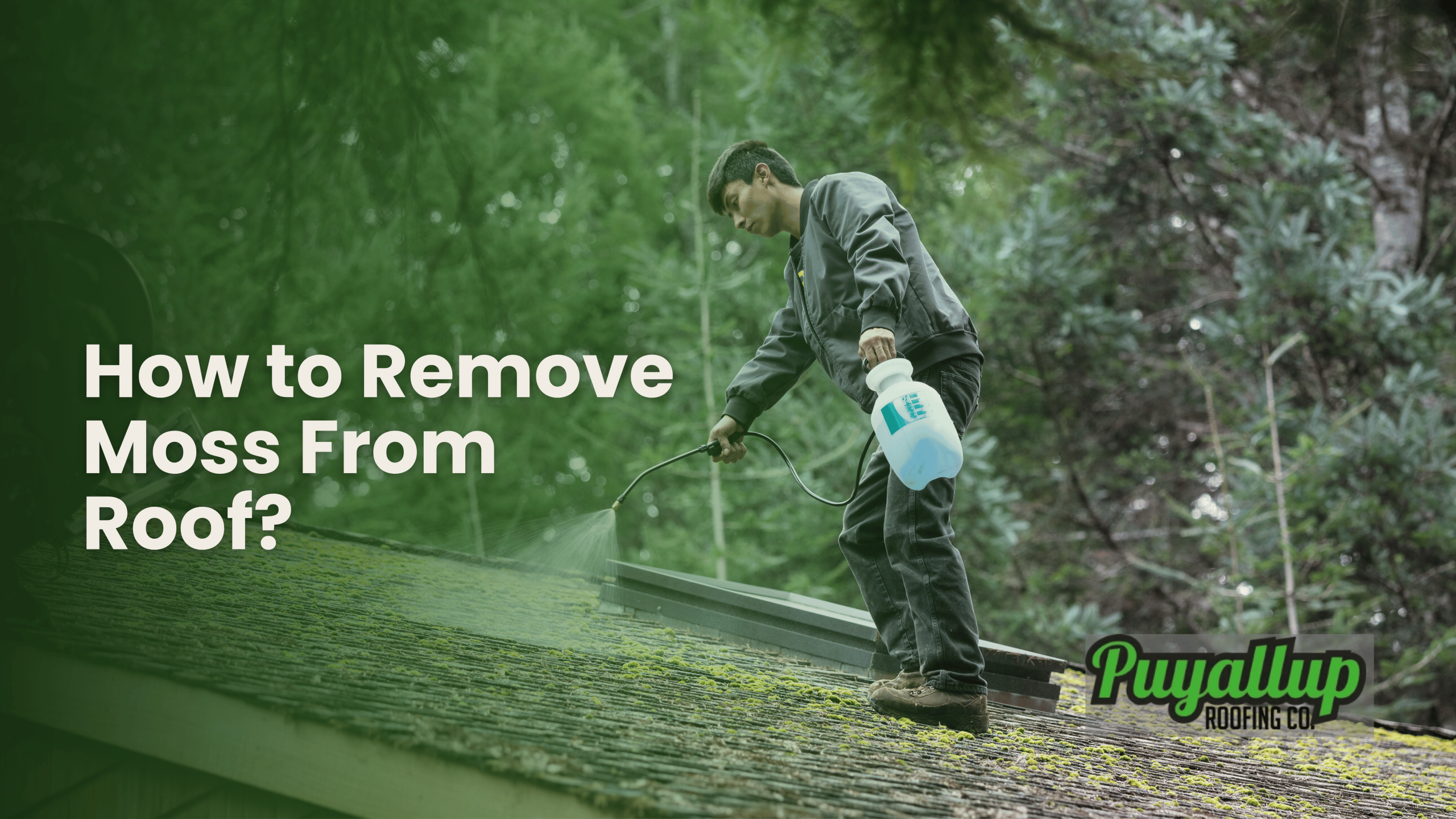
A little green on your roof may look harmless, but moss can quietly turn into a serious roofing problem. What begins as a thin layer of growth can retain moisture against roofing materials, impede drainage, and contribute to premature deterioration. That is why learning how to remove moss from roof surfaces safely is an important part of home maintenance.
Moss commonly develops in damp, shaded areas where moisture remains for extended periods. Roofs surrounded by trees or exposed to limited sunlight may be especially vulnerable. Although removing moss may seem like a simple DIY cleaning project, getting the process wrong can damage shingles, roof tiles, or protective surfaces.
In this guide, Puyallup Roofing explains practical ways to approach roof moss removal, what mistakes to avoid, and how regular maintenance can help keep moss from returning.
How to Remove Moss From Roof Without Causing Damage
Before attempting to remove moss, inspect the roof from the ground whenever possible. Look for areas where moss has spread, shingles appear lifted, or moisture collects. If the roof is steep, wet, or difficult to access, climbing onto it can create unnecessary safety risks.
For minor growth on an easily accessible roof, some homeowners may choose gentle cleaning methods. A soft brush or broom can help loosen moss without aggressively scraping the roofing surface. Work carefully and avoid pulling or prying at shingles.
Never treat roof cleaning as a race. Rushing can cause broken materials, damaged granules, or accidental falls. If extensive moss is present, professional moss removal is often safer and more effective.
Puyallup Roofing recommends evaluating the condition of the roofing materials before deciding whether a DIY approach is appropriate.
Why Moss Grows on a Roof
Moss thrives when moisture, shade, and organic material create a favorable environment. Trees near the home can block sunlight while dropping leaves and small debris onto the roof. These materials can retain moisture, creating an ideal environment for moss to establish itself.
Poor airflow can also contribute to persistent dampness. If sections of the roof remain wet long after rainfall, moss may continue to grow even after cleaning.
Moss is not necessarily an immediate sign that the entire roof needs replacement. However, significant growth should not be ignored. As moss becomes thicker, it can work its way beneath certain roofing materials and keep moisture against the surface.
Understanding why moss develops is just as important as learning how to remove it. Without addressing the conditions encouraging growth, moss can return relatively quickly.
Can Water Help With Roof Moss Removal?
Water has an important role in roof cleaning, but using it incorrectly can cause problems. A garden hose with gentle water pressure can help rinse away loosened debris after moss has been treated.
Avoid using a pressure washer on roof shingles unless the roofing manufacturer specifically permits that method. High-pressure water can strip protective granules from asphalt shingles, loosen materials, and force water beneath roofing components.
Water should generally be used as part of a controlled cleaning process rather than as the primary force for removing stubborn moss. When rinsing, direct water to follow the roof’s natural drainage path.
If you notice water entering the home, damaged shingles, or areas that remain unusually wet, stop the cleaning process and arrange for a professional inspection.
Choosing the Right Moss Remover
A suitable moss remover can help weaken and loosen established growth, but not every cleaning chemical is appropriate for every roof. Roofing materials can react differently to cleaning products, so product instructions and manufacturer recommendations should always be considered.
Some moss removers are designed specifically for roofing applications. These products may be available as ready-to-use solutions or concentrates that are diluted according to the manufacturer’s instructions.
Avoid randomly mixing chemicals or assuming that a stronger concentration will produce better results. Certain chemicals can damage landscaping, siding, gutters, or roofing materials if they are used incorrectly.
When selecting a removal solution, consider the type and condition of the roof as well as the surrounding environment. Puyallup Roofing can help homeowners determine whether professional roof cleaning or another solution is more appropriate for their property.
A Gentle Approach to Removing Moss
Once you have selected an appropriate treatment, follow the product’s instructions carefully. A pump sprayer may be useful for applying a compatible moss treatment evenly across affected areas.
Allow the product to work for the recommended amount of time. Avoid aggressively scrubbing immediately if the treatment is intended to weaken the moss first.
For light growth, a soft brush may help remove remaining material. Move carefully and avoid scrubbing across the surface with excessive force. When it comes to roof shingles, preserving the protective granules is essential.
Never walk directly across fragile or heavily moss-covered areas if doing so could damage the roofing. Wet moss can also be extremely slippery.
Professional roof cleaning teams have the appropriate equipment and techniques to handle these conditions. When access is difficult, or the moss covers a large portion of the roof, professional service can reduce the risk of injury and accidental damage.
Watch for Damage Beneath Roof Moss
Moss removal provides an opportunity to inspect the roof for hidden problems. Once the growth has been cleared, look for cracked roof tiles, damaged shingles, loose materials, exposed areas, or signs of moisture.
Moss itself may not cause every roofing problem, but persistent moisture can contribute to deterioration over time. If water becomes trapped around roofing materials, it can increase the risk of water damage and shorten the useful life of certain components.
During an inspection, pay attention to:
- Lifted, cracked, or missing shingles
- Broken roof tiles or damaged edges
- Areas where moisture appears trapped
- Sagging sections of the roof
- Damaged flashing or seals
- Signs of water entering the home
If you find damage, do not simply cover it with a cleaning solution. Cleaning should not replace necessary roof repair. A professional assessment can determine whether a small repair is sufficient or whether more extensive roofing work is needed.
Puyallup Roofing can help homeowners distinguish between a routine cleaning concern and a roofing issue that requires professional attention.
How Roof Shingles and Tiles Respond to Moss
Different roofing materials can respond differently to moss growth and cleaning. Asphalt roof shingles have a protective surface that can be damaged by harsh scrubbing, aggressive chemicals, or excessive pressure.
Roof tiles may also become fragile with age. Walking directly on certain tile surfaces can lead to cracking, so the appropriate cleaning method depends on the material and installation.
Before starting any moss removal project, identify the roofing material and check the manufacturer’s care recommendations. This simple step can prevent an otherwise unnecessary repair.
It is also important to consider the roof’s age. Older roofing materials may already have weakened areas that become more apparent during cleaning.
Puyallup Roofing approaches roof maintenance with attention to both the immediate cleaning task and the long-term condition of the roofing system.
Prevent Roof Moss From Growing Back
Removing existing moss is only half the job. If the conditions that encouraged growth remain unchanged, new moss may eventually appear.
Improving sunlight and airflow around the roof can help reduce persistent moisture. Trimming branches that heavily shade the roof may allow surfaces to dry more quickly. Keeping gutters and downspouts clean can also help ensure proper drainage around the home.
Regular roof inspections can catch small patches of moss before they become widespread. A seasonal cleaning routine may also help remove leaves and organic debris that retain moisture.
Other preventive steps include maintaining nearby vegetation, monitoring shaded roof sections, and addressing drainage problems promptly. Prevention is generally easier than repeatedly dealing with heavy moss removal.
A professional roofing inspection can also identify areas where moisture may be contributing to recurring growth.
When Professional Moss Removal Is the Better Choice
DIY roof cleaning may seem appealing, but working at height introduces real safety concerns. A ladder, extension equipment, wet surfaces, and steep rooflines can create hazardous conditions.
Professional assistance is particularly useful when moss covers a large section of the roof, the roof is steep, roofing materials are fragile, or there are signs of existing damage.
A qualified roofing professional can assess the surface, recommend an appropriate cleaning solution, and identify problems that may not be obvious from ground level. This can make the cleaning process more thorough while helping protect the roofing materials.
Professional service can also be valuable when moss returns repeatedly. Recurring growth may indicate persistent moisture, excessive shade, drainage issues, or other conditions that require attention.
Puyallup Roofing provides professional roofing guidance to help homeowners protect their roofs while addressing moss, moisture, cleaning, repair, and maintenance concerns.
Keep Your Roof Clean, Dry, and Ready for the Seasons
Knowing how to remove moss from roof surfaces is useful, but the safest approach is to focus on protecting the roofing material throughout the process. Gentle cleaning, appropriate moss removers, controlled water use, and regular inspections can all contribute to better roof maintenance.
Do not ignore moss simply because it appears small. Over time, persistent moisture and organic growth can contribute to roofing damage and create conditions that complicate future repairs. At the same time, avoid aggressive DIY methods that could cause more harm than the moss itself.
Whether your roof needs basic cleaning, moss removal, repair, or a closer inspection, addressing the problem early can help protect your home and extend the service life of your roofing materials.