

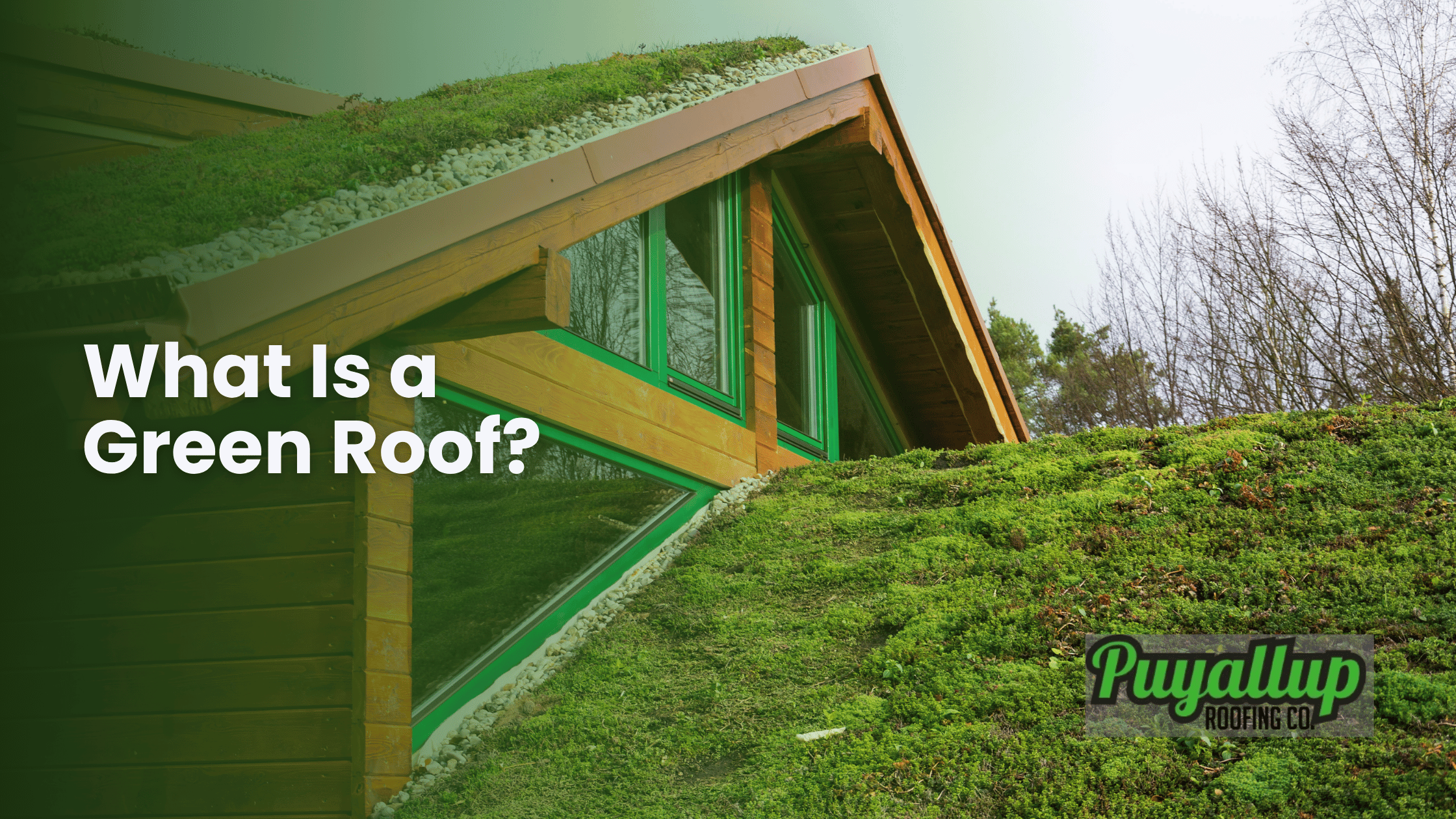
If you are asking what is a green roof, the simplest answer is a roofing system built to support living vegetation above a waterproof roof assembly. It is much more than putting plants or garden boxes on top of a building. A properly designed green roof uses several engineered layers to manage water, protect the roof membrane, support plant growth, and safely transfer added weight to the building.
For property owners in the Pacific Northwest, the idea can be especially appealing. We already deal with substantial rainfall, stormwater management, moss, drainage, and long wet seasons. But a green roof has to be designed as a complete roofing system, not simply as landscaping placed overhead. At Puyallup Roofing, we believe the condition and design of the roof underneath should always come first.
Green Roof Basics at a Glance
Before getting into the construction details, here are the most important things to understand:
- A green roof combines vegetation with an engineered roofing and drainage system.
- Most systems include plants, growing medium, filter fabric, drainage, root protection, and waterproofing.
- Extensive roofs are lighter and generally require less maintenance than intensive rooftop gardens.
- Green roofs can slow stormwater runoff and reduce rooftop temperatures.
- Saturated weight matters, so the existing structure must be evaluated before installation.
- Waterproofing, drainage, flashing, penetrations, and maintenance access need to be planned before the plants go in.
How Does a Green Roof Actually Work?
A green roof works by placing a carefully designed vegetated assembly above the building’s waterproof roofing system.
The National Park Service explanation of green roof construction describes the basic assembly as including vegetation, growing medium, filtration and drainage components, waterproofing or root-resistant layers, insulation where required, and structural roof support.
Starting from the top, a typical system may contain:
- Plants selected for the roof environment
- Lightweight engineered growing medium
- Filter fabric that keeps fine particles out of the drainage layer
- Drainage or water-retention components
- Root barrier or membrane protection
- Waterproof roofing membrane
- Insulation and other roof-system components
- Structural roof deck
One detail matters more than many owners realize: ordinary garden soil is generally not the right material. It becomes heavy when wet, can compact, and may drain poorly. Engineered green-roof media are designed to provide drainage and plant support while limiting unnecessary weight.
The Oregon State University Extension guidance on vegetated roofs similarly emphasizes waterproofing, engineered growing media, drainage, and careful stormwater design rather than simply adding soil to an existing roof.
Practical warning: Always evaluate the weight of a green roof when it is fully saturated with water, not only when the growing medium is dry.
Extensive vs. Intensive Green Roofs
Not every living roof is designed the same way. Green roofs are commonly divided into extensive, intensive, and sometimes semi-intensive systems.
| Type | Typical Character | Maintenance |
|---|---|---|
| Extensive | Shallow growing medium, low-growing plants, lighter system | Lower |
| Semi-intensive | Moderate growing depth and broader planting options | Moderate |
| Intensive | Deep growing medium, larger plants and usable garden areas | Higher |
Extensive green roofs often use growing media less than about six inches deep and plants that can tolerate exposed rooftop conditions. Intensive systems can have much deeper growing layers capable of supporting larger perennials, shrubs, or even small trees.
The deeper the system becomes, the more important structural capacity, irrigation, drainage, maintenance access, and load calculations become.
What Are the Benefits of a Green Roof?
A well-designed green roof can do several jobs at once.
One of the most practical advantages is stormwater management. Rainfall can be temporarily stored within plants, growing media, and drainage components instead of immediately running from the roof into gutters and storm drains.
Green roofs can also lower roof-surface temperatures. According to the U.S. Environmental Protection Agency’s green roof guidance, vegetated roofs provide shade and evapotranspiration that can reduce roof and surrounding air temperatures. The EPA also notes that actual stormwater performance varies with factors such as rainfall patterns and system design.
Other potential benefits include:
- Less rapid stormwater runoff
- Additional protection for the waterproof roof membrane
- Reduced rooftop heat gain
- Added habitat for insects and birds
- More usable or attractive rooftop space on certain intensive systems
- Additional insulation effects under some conditions
Did you know? EPA research cited on its heat-island guidance reports green-roof surfaces can be up to 56°F cooler than conventional roof surfaces under studied conditions.
What Most Green Roof Guides Forget to Mention
When people first research what is a green roof, plants tend to get most of the attention. From a roofing perspective, the hidden components deserve at least as much attention.
Drainage still has to work
A green roof is meant to retain some water, but it cannot become a permanently waterlogged roof.
Drains, scuppers, overflow routes, gutters, and drainage layers need to remain functional. Leaves, plant debris, sediment, or roots should not be allowed to block critical drainage points.
The membrane becomes harder to reach
On a conventional flat roof, a contractor may be able to inspect the membrane directly. Once layers of growing media, drainage products, and vegetation cover it, reaching a leak can require considerably more work.
That makes membrane selection, seams, flashing, penetrations, edge details, and initial installation quality especially important.
Roof penetrations need breathing room
Vents, HVAC equipment, skylights, drainage points, walls, and other penetrations should not disappear into vegetation.
Clear service zones make inspection easier and reduce the chance that roots, debris, or trapped moisture interfere with important roofing details.
Plants still need maintenance
Even low-maintenance does not mean no maintenance.
The University of Delaware Cooperative Extension green roof guide notes that extensive roofs are designed for relatively low maintenance, while intensive roofs require substantially greater care.
Expect periodic inspection, unwanted plant removal, drain cleaning, replacement planting, and irrigation checks where irrigation is installed.
Can You Put a Green Roof on an Existing Building?
Sometimes, but never assume an existing roof can safely carry one.
The first questions should concern structure and waterproofing:
- How much additional dead load can the roof framing safely support?
- What will the assembly weigh after prolonged rainfall?
- Is the existing membrane suitable for being covered?
- Is the roof approaching replacement age?
- Are drains and overflow systems adequate?
- Can maintenance crews safely access the roof?
- How will penetrations and edges remain inspectable?
In Western Washington, saturated weight deserves particular attention because roofing systems must perform through extended wet conditions.
Installing an elaborate vegetated assembly over a roof that already needs replacement can create an expensive problem later. If the membrane fails, layers above it may need to be removed before repairs can even begin.
Build the Roofing Foundation Before the Garden
A successful green roof depends on the roofing system underneath it. That is where experienced roof evaluation becomes important.
Puyallup Roofing works with both residential and commercial roofing systems, including flat roofs and commercial systems such as TPO and EPDM. For an owner considering a green roof, the roofing side of the project may involve evaluating the existing membrane, drainage, roof deck, penetrations, flashing, repair needs, or whether replacement should happen before additional rooftop systems are installed.
Green roofs can also require coordination with structural engineers, architects, landscape professionals, and specialized green-roof system designers. The goal is not to force vegetation onto a roof that was never prepared for it. It is to make sure every layer works together.
Why property owners work with Puyallup Roofing:
- More than 50 years of roofing expertise across residential and commercial projects
- Licensed, bonded, and insured in Washington under license PUYALRC777CL
- Owens Corning Platinum Preferred Contractor status
- Experience with shingle, metal, flat, repair, and commercial roofing systems
- Service throughout greater Western Washington, including King, Pierce, and Thurston counties
- A 4.8 Google rating based on 77 reviews shown on the company website at the time of publication
Planning a Roofing Project in Western Washington?
If you are considering a green roof, replacing the roof beneath an existing rooftop system, or simply want to know whether your current roof is ready for future improvements, start with the roof itself.
Puyallup Roofing serves homeowners, businesses, property managers, and other property owners throughout Puyallup and the greater Western Washington region, including King County, Pierce County, and Thurston County. You can get in touch with our team to discuss your roofing project and determine the right next step for your property.
Frequently Asked Questions
Is a green roof the same as a rooftop garden?
No. A true green roof is an engineered vegetated roofing assembly, while containers or planters placed on a conventional roof do not necessarily constitute a green roof.
Can green roofs be installed on sloped roofs?
Yes, some green roof systems can be used on sloped roofs, but steeper slopes require specialized measures to control erosion, drainage, and movement of the growing medium.
Do green roofs attract insects?
They can attract pollinators and other insects because they create living habitat, but plant selection and routine maintenance can help manage unwanted growth and pests.
Does a green roof need irrigation?
Not always. Some extensive systems can rely primarily on rainfall once established, while deeper or more diverse planting systems may require supplemental irrigation during dry periods.
Can solar panels and green roofs be used together?
Yes. They can sometimes be designed together, but equipment placement, shading, plant height, maintenance access, wind loads, drainage, and roof penetrations must be coordinated from the beginning.
How long does a green roof last?
There is no single lifespan for every system. Longevity depends on the waterproof membrane, installation quality, drainage, vegetation, maintenance, climate, and how easily problems can be inspected and repaired.