

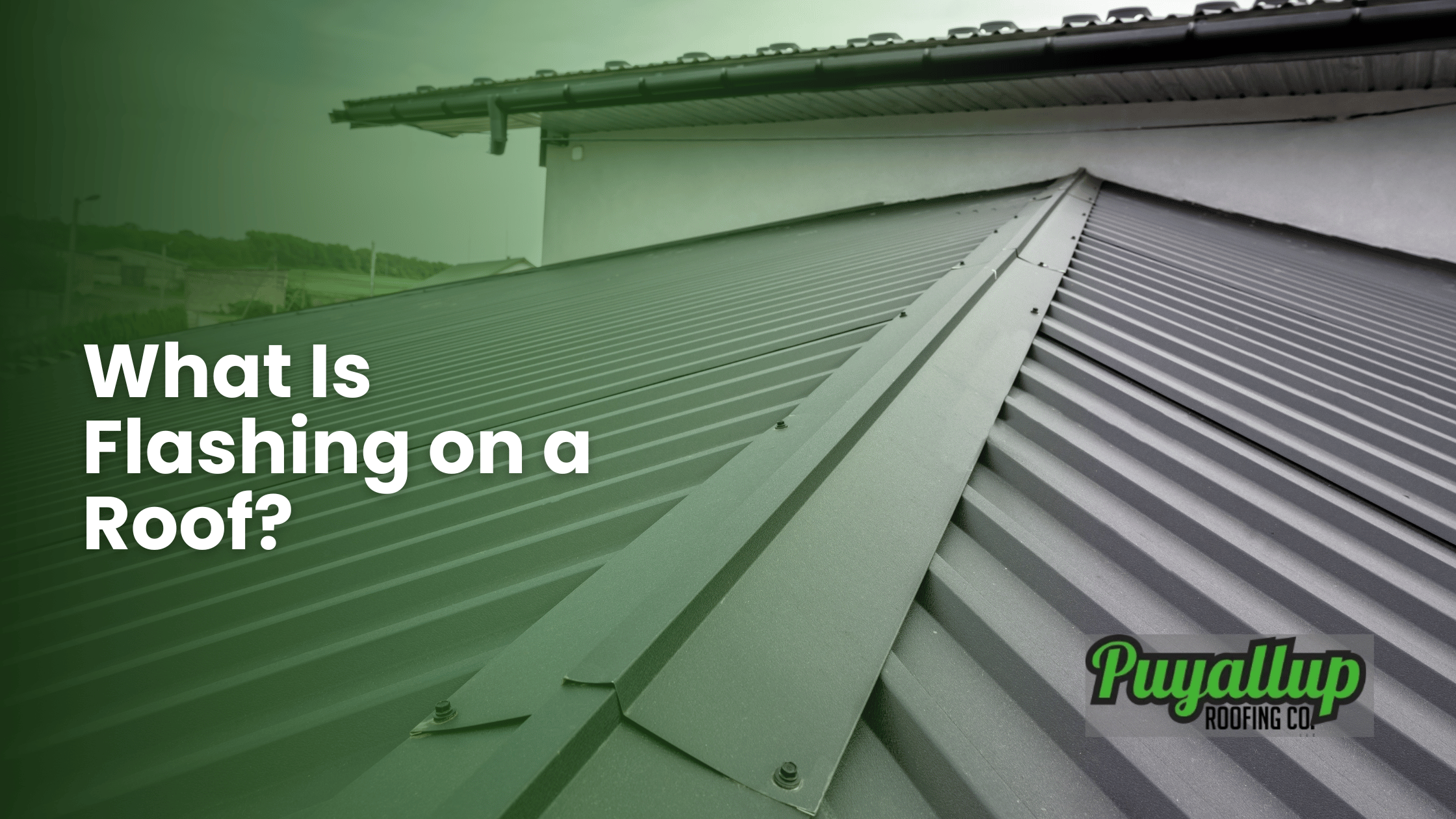
What Is Flashing on a Roof? The Small Detail That Prevents Major Leaks
If you have ever wondered what is flashing on a roof, it is the protective material installed around the most leak-prone parts of a roofing system. Flashing directs rainwater away from joints, openings, edges, walls, chimneys, vents, skylights, and valleys before the water can reach the roof deck or enter your home.
It may look like a simple strip of metal, but properly installed flashing is one of your roof’s most important defenses against moisture. In the rainy Pacific Northwest, even a small flashing problem can allow repeated water intrusion that eventually damages insulation, wood framing, drywall, and interior finishes.
What Homeowners Should Know About Roof Flashing
- Flashing is a waterproofing material that redirects water away from vulnerable roof areas.
- Most roof flashing is made from galvanized steel, aluminum, copper, or another corrosion-resistant material.
- It is commonly installed around chimneys, vents, skylights, valleys, walls, and roof edges.
- Flashing must overlap correctly with shingles so water continues moving down the roof.
- Rust, loose pieces, failed sealant, storm damage, and poor installation can cause flashing leaks.
- Ceiling stains near a chimney or exterior wall may indicate damaged flashing.
- A professional roof inspection can identify problems before hidden water damage spreads.
How Does Roof Flashing Work?
Roof flashing creates a controlled path that moves water over the roofing materials rather than allowing it to enter a seam or joint.
A roof is not one uninterrupted surface. It includes edges, penetrations, changes in slope, adjoining walls, and areas where two roof planes meet. These transitions are difficult to waterproof with shingles alone. Flashing covers or supports those transitions and guides water toward the lower portion of the roof.
The system depends on correct layering. In most applications, the upper section of the flashing sits beneath a shingle or another water-shedding material, while the lower section directs water onto the surface below it. Each component overlaps the next, similar to the scales on a fish.
This is why simply covering a questionable area with roofing cement is not the same as installing roof flashing correctly. Sealant can support a properly designed detail, but it should not be the only thing preventing water from entering the roof.
Where Is Flashing Installed on a Roof?
Different parts of a roof require different flashing shapes and installation methods. The name usually describes either the flashing’s location or its function.
Step flashing along exterior walls
Step flashing is installed where a sloped roof meets a vertical wall, such as beside a dormer or second-story exterior wall.
Instead of using one long piece, a roofer installs multiple rectangular pieces. Each piece overlaps the one below it and works with an individual course of shingles. This stepped pattern allows rain to move down the roof without entering the roof-to-wall joint.
Wall flashing can fail when pieces are missing, installed on top of the shingles, fastened incorrectly, or separated from the wall.
Counter flashing around chimneys
Chimneys often need both base flashing and counter flashing.
Base flashing works with the shingles at the bottom and sides of the chimney. Counter flashing overlaps the upper edge of the base flashing and helps stop water from running behind it. On masonry chimneys, the counter flashing may be secured into a mortar joint instead of being attached only to the surface.
This two-part arrangement also allows some movement between the chimney and roof. A chimney and roof deck can expand, contract, and settle differently over time.
Valley flashing between roof slopes
Roof valleys form where two sloped roof sections meet. These channels collect runoff from both sides, which means they may carry a large amount of water during steady Puyallup rain.
Valleys may use exposed metal flashing, a concealed lining beneath the shingles, or a system designed for the specific roofing material. Proper valley installation is especially important because a small obstruction, exposed fastener, or misplaced shingle can interfere with drainage.
Leaves, needles, moss, and roof debris can also slow the flow of water through valleys. When water backs up, it may move sideways beneath nearby shingles.
Vent pipe flashing
Plumbing vents and other pipes create openings through the roof deck. A pipe boot or vent flashing seals the area around the penetration.
The base of the flashing is layered with the shingles, while a collar fits around the pipe. Rubber collars can crack from weather exposure and age. Metal pieces may corrode or pull loose. A failed pipe boot can create a leak that appears around a bathroom, attic pipe, or interior wall.
Skylight flashing
A skylight interrupts the normal flow of water down the roof, so it needs a complete flashing system around all four sides.
A typical installation may include sill flashing at the bottom, step flashing along the sides, and head flashing across the top. Many modern skylights use manufacturer-specific flashing kits based on the skylight model, roof pitch, and roofing materials.
Caulking around an old skylight may temporarily reduce visible leaking, but it cannot correct improperly layered or missing flashing.
Drip edge at the roof perimeter
Drip edge is metal flashing installed along the eaves and rake edges of a roof. It helps water leave the roof cleanly instead of curling beneath the shingle edge or soaking into the fascia and roof deck.
The metal also gives the edge of the roofing system a finished appearance and helps protect it from wind-driven rain. Its exact position relative to the underlayment can vary between eave and rake applications.
Kickout flashing at the bottom of a wall
Kickout flashing is a small but critical detail installed where the bottom of a sloped roof meets an exterior wall.
Its purpose is to direct water away from the wall and into the gutter. Without it, runoff can flow behind siding or along the wall surface. Over time, that moisture may damage sheathing, trim, insulation, and framing while remaining difficult to see from inside the home.
Kickout flashing is one of the details homeowners rarely notice until staining, rot, or siding damage appears.
What Materials Are Used for Roof Flashing?
Most flashing is made from a material that can be shaped while remaining durable in wet conditions.
| Flashing material | Common characteristics |
|---|---|
| Galvanized steel | Strong, widely used, and commonly paired with asphalt shingle roofing |
| Aluminum | Lightweight and easy to shape, but compatibility with surrounding materials matters |
| Copper | Durable, workable, and long-lasting, often used on premium or specialty roofs |
| Coated metal | Designed to improve corrosion resistance or coordinate with roof colors |
| Flexible membrane | Used in selected concealed areas, transitions, and specialty applications |
The best material depends on the roofing system, nearby metals, wall construction, exposure, budget, and manufacturer requirements. Mixing incompatible materials can encourage corrosion. The thickness and shape of each piece also matter. Flashing that is too short, too flat, or unable to overlap properly may not control water effectively.
Tile, metal, cedar, and asphalt shingle roofs may require different flashing details. A contractor should select materials and installation methods that match the entire roof assembly rather than treating every roof the same way.
What Causes Roof Flashing to Fail?
Flashing usually fails because of poor installation, physical damage, corrosion, age, or movement within the building.
Improper layering
Water naturally follows gravity, but wind can push it sideways or upward beneath poorly installed materials. Flashing and shingles must be layered so each upper component sheds water onto the component below it.
Reverse laps, gaps, exposed seams, and misplaced fasteners can create direct paths into the roof deck.
Relying too heavily on sealant
Roofing sealant has useful applications, but it should not replace sound metalwork and proper water-shedding design.
Sealant can dry, crack, separate, or lose adhesion as surfaces expand and contract. Repeatedly applying new material over an existing problem may hide the defect without resolving it.
Corrosion and damaged metal
Scratched coatings, incompatible metals, standing moisture, or prolonged exposure can cause flashing to rust or corrode. Thin metal may also bend during storms, roof work, gutter cleaning, or equipment installation.
Building movement
Roof decks, walls, chimneys, and framing can move slightly with temperature changes, moisture, settlement, and age. Correct flashing details account for this movement. Improperly fastened pieces may buckle, pull away, or open at the seams.
Debris, moss, and clogged valleys
Puyallup-area roofs regularly collect needles, leaves, moss, and organic debris. When these materials build up around flashing or in valleys, they can trap moisture and slow drainage.
Water may then remain against seams longer than intended or travel beneath the shingles. Regular maintenance can reduce this risk, but walking on a wet or moss-covered roof is dangerous and should be avoided.
What Are the Signs of Damaged Flashing?
A flashing problem does not always produce an obvious stream of water. Slow leaks may appear only during heavy rain, strong wind, or certain storm directions.
Warning signs can include:
- Brown or yellow stains on ceilings
- Damp drywall near a chimney or exterior wall
- Peeling paint around a skylight
- Water marks on attic framing
- Rusted, lifted, bent, or missing metal
- Loose shingles near a wall or roof penetration
- Cracked rubber around a vent pipe
- Moss or debris collecting in roof valleys
- Rot near the fascia, siding, or roof edge
- Recurring leaks that return after sealant is applied
The location of an indoor stain does not always identify the exact entry point. Water can move along the roof deck, rafters, nails, or pipes before it becomes visible. A roofing inspection should trace the water path rather than assuming the damaged ceiling is directly beneath the failed flashing.
Can Damaged Flashing Be Repaired Without Replacing the Roof?
Yes, localized flashing can often be repaired or replaced without installing an entirely new roof. The right solution depends on the condition of the surrounding shingles, underlayment, roof deck, siding, chimney, and penetration.
A targeted repair may involve removing nearby shingles, replacing damaged metal, correcting the overlap, installing new shingles, and sealing only the appropriate joints. In some cases, rotted decking or damaged wall materials must also be replaced.
Reusing flashing during a roof replacement should be considered carefully. Even when an old piece appears usable, hidden corrosion, nail holes, bending, or incompatible dimensions may affect the new system. New flashing is often the safer choice when surrounding roofing materials are being replaced.
Why Flashing Matters in Puyallup and Western Washington
Western Washington roofs face frequent rainfall, wet winters, wind-driven storms, moss growth, falling branches, and debris from evergreen trees. These conditions put extra pressure on valleys, roof-to-wall connections, edges, and penetrations.
A minor installation defect may stay unnoticed during light rain but leak during a long storm when materials remain saturated. Wind can also force water into openings that appear protected when viewed from the ground.
That local weather pattern makes routine inspection important. Homeowners should also consider an inspection after major wind events, visible tree damage, chimney work, skylight replacement, solar installation, or any project that adds a new roof penetration.
Local Roofing Guidance from Puyallup Roofing Company
Puyallup Roofing Company helps homeowners and businesses protect their properties through roof repair, replacement, maintenance, gutter, and inspection services. With more than 50 years of combined experience, our licensed, bonded, and insured team serves Puyallup and communities throughout Pierce, King, and Thurston counties. We believe in clear recommendations, quality workmanship, and a no-pressure experience.
Contact Puyallup Roofing Company at (253) 201-8034 or info@puyalluproofing.com. Visit us at 6411 72nd Street East, Puyallup, WA 98371, or contact us to schedule a free roofing estimate.
Frequently Asked Questions About Roof Flashing
Is roof flashing always made of metal?
No. Most visible roof flashing is metal, but some roofing systems also use flexible membranes or manufacturer-designed components. The correct material depends on the roof type, location, surrounding materials, and installation requirements.
Should flashing go over or under shingles?
It may do both at different points. Flashing must be woven or layered with the shingles so upper materials overlap lower materials and guide water toward the roof edge. Placing every piece entirely on top is usually not correct.
How long does roof flashing last?
Properly installed metal flashing can last for many years, but its service life depends on the material, exposure, installation quality, corrosion, building movement, and surrounding roof condition. It should be checked during regular roof inspections.
Can I seal leaking flashing with caulk?
Caulk may provide temporary protection in limited situations, but it cannot correct missing metal, poor overlap, hidden corrosion, or an improper installation. A recurring leak needs an inspection and a repair that restores the correct drainage path.
Does flashing need to be replaced with new shingles?
Not every piece automatically requires replacement, but existing flashing should be carefully evaluated. Bent sections, corrosion, nail holes, poor dimensions, and old installation methods can make replacement the more reliable option during a new roof installation.
How can I see flashing from the ground?
You may notice metal around a chimney, beneath a skylight, in open valleys, or along the roof edge. Much of the flashing is concealed beneath shingles or siding, so a ground-level view cannot confirm that the complete system is installed correctly.
Protect the Areas Where Roof Leaks Usually Begin
Flashing may be one of the least noticeable parts of your roof, but it protects some of the most vulnerable areas. Waiting for a ceiling stain can allow a small opening to become a larger repair involving wet insulation, damaged decking, or interior finishes.
If you have noticed a leak, damaged metal, loose shingles, or moisture near a chimney, wall, skylight, valley, or vent, contact Puyallup Roofing Company at (253) 201-8034 to schedule an inspection and receive a clear, no-pressure recommendation.