
Gig Harbor gutters do more than catch rain. They help move water away from the roof, siding, fascia, landscaping, and foundation before moisture has a chance to create bigger problems. Puyallup Roofing provides professional gutter and gutter guard solutions for homeowners who want a drainage system that fits the home, works with the roof, and is built for Western Washington conditions.
What Matters Most in a Good Gutter System
- Proper sizing and slope so rainwater moves instead of sitting in the gutter
- Secure attachment to sound fascia, not weakened or rotted wood
- Downspouts placed where water can discharge safely away from the home
- Durable materials suited to wet weather and regular seasonal use
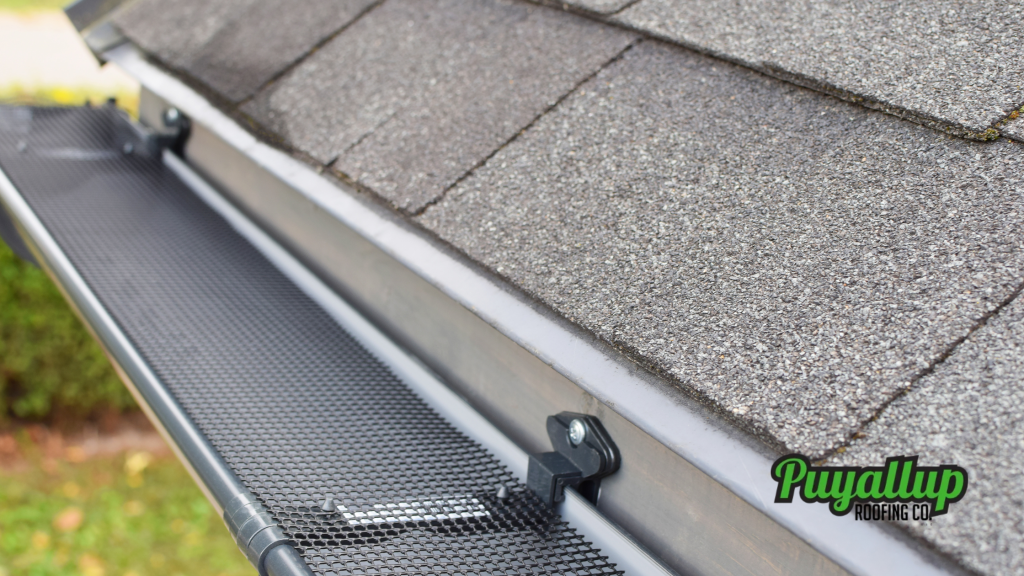
- Gutter guards selected for the actual debris around the property
- Clear inspection, installation, testing, and cleanup from start to finish
Why Gig Harbor Gutters Need to Work as Part of the Whole Roof
A gutter system only works well when the roof edge, fascia, downspouts, and drainage path work together. Water should leave the roof, enter the gutter cleanly, move toward the outlets, and discharge away from vulnerable areas around the home.
That matters in Gig Harbor because wet seasons can expose small drainage problems quickly. Overflow can repeatedly soak siding, fascia, soil, walkways, and areas near the foundation. The U.S. Environmental Protection Agency’s moisture-control guidance emphasizes managing roof and surface water around buildings, while the City of Gig Harbor’s stormwater program focuses on responsible runoff and drainage management in the local community.
What Happens When Gutters Stop Draining Correctly?
Overflow, leaks, loose sections, and poor downspout placement can send water where the home was never designed to handle it.
A clogged or damaged gutter may spill water over the front or back edge. Over time, that can contribute to stained siding, deteriorated fascia, erosion below the roofline, damp areas near the foundation, and unnecessary roof-edge repair. Moss, leaves, needles, and roof debris can also slow flow and make cleaning more frequent.
When Repair Makes Sense and When Replacement Is Smarter
Not every gutter problem requires a full replacement. A localized repair may be enough when the system is still properly sized, securely attached, and generally in good condition.
Replacement becomes more practical when gutters are repeatedly leaking, sagging, separating at joints, pulling away from the fascia, badly corroded, or no longer moving water effectively. It can also make sense when an older system has poor downspout placement or does not match the current roof drainage needs.
A professional evaluation should look beyond the visible gutter. The fascia condition, roof edge, fasteners, pitch, outlet locations, and discharge points all affect how the finished system performs.
What to Expect From Professional Gutter Installation
A dependable installation starts with the home, not with a one-size-fits-all product.
Inspecting the Roof Edge and Fascia
Before new gutters go up, the roofline and fascia should be checked for visible damage or weak areas. Installing a new system over compromised wood can shorten its service life and create attachment problems later.
Planning the Gutter and Downspout Layout
The next step is determining where water naturally collects and how it should move off the property. Gutter size, roof area, roof shape, valleys, pitch, and downspout locations all matter.
For many homes, seamless metal or aluminum gutters can reduce the number of joints along long runs and create a clean finished appearance. The goal is not simply to hang gutters. It is to create a drainage path that handles water efficiently without placing unnecessary stress on the roof edge or fascia.
Installing, Pitching, and Testing the System
Gutters need a controlled slope toward the outlets. Too little slope can leave standing water. Poor alignment can encourage overflow. After installation, the system should be checked for secure attachment, clean transitions, proper downspout flow, and obvious leaks.
Puyallup Roofing also provides professional gutter and gutter guard installation for homeowners who want roof drainage and debris control handled as one coordinated system.
Do Gutter Guards Eliminate Gutter Cleaning?
No. Gutter guards can reduce the amount of leaves and larger debris entering the system, but they do not make gutters maintenance-free.
Fine debris, pollen, roof granules, moss, and needles can still collect on or around some gutter covers. Periodic cleaning and inspection remain important, especially for homes near mature trees. The right guard should be chosen based on roof type, gutter condition, surrounding debris, and expected maintenance.
What Affects the Cost of Gig Harbor Gutters?
Cost depends on the home and the system being installed, so a useful estimate should be based on the actual property rather than a generic per-foot promise.
Key factors include total gutter length, number of stories, roofline complexity, material choice, number and placement of downspouts, removal of old gutters, fascia repair needs, and whether gutter covers or guards are included. Difficult access can also affect labor.
A lower initial cost is not always the lowest long-term cost. Proper sizing, secure fastening, sensible drainage, and quality installation matter because correcting a poorly performing system later can add repair expense.
Plan Your Gig Harbor Gutters With a Local Roofing Team
Your gutters should support the roof, not become another source of water problems. Puyallup Roofing works with homeowners who want clear recommendations, quality workmanship, and a system designed around the property rather than a standard package.
The company serves communities throughout Pierce County, including Gig Harbor, Tacoma, Lakewood, Puyallup, Bonney Lake, and nearby areas. Get in touch to schedule an estimate and discuss the right gutter solution for your home.
Frequently Asked Questions
How Long Does Gutter Installation Usually Take?
Many residential installations can be completed efficiently, but timing depends on the home’s size, roofline, access, repair needs, and the scope of the gutter system.
A property that requires fascia repair, complex downspout routing, or removal of an older system may require additional work before installation is complete.
Can Gutters Be Replaced Without Replacing the Roof?
Yes. Gutters can usually be replaced as a separate project as long as the roof edge and fascia are suitable for secure installation.
If roof replacement is already planned soon, coordinating both projects can also make sense so the roof edge and drainage system work together correctly.
How Often Should Gig Harbor Gutters Be Cleaned?
Most homes benefit from regular inspection and seasonal cleaning, with more frequent attention when trees, moss, needles, or heavy debris collect around the roof.
Homes with gutter guards still need occasional checks because smaller debris can accumulate even when larger leaves are blocked.
Are Seamless Gutters Worth Considering?
Yes. Seamless gutters reduce the number of joints along straight runs, which can lower the number of potential leak points and create a cleaner appearance.
The best material and gutter style still depend on the roofline, drainage demands, budget, and appearance of the home.
Can Damaged Fascia Be Ignored During Gutter Installation?
No. Gutters rely on a secure mounting surface, so damaged or rotted fascia should be addressed before or as part of installation.
Attaching a new gutter system to weakened material can lead to movement, sagging, and premature repair.
Do I Need Gutter Guards on Every Home?
No. Gutter guards are most useful when debris creates recurring clogs or cleaning is difficult.
The right choice depends on nearby trees, roof design, gutter condition, debris type, and how easily the system can be inspected and maintained.
Is a Metal Roof Better Than Shingles?
What Is The Plural Of Roof?
How Long Should a Roof Last?
How to Remove Moss From Roof?