
Orting gutters have one important job: move water away from the parts of your home that should stay dry. When the system is damaged, poorly pitched, undersized, or no longer draining correctly, water can overflow near the roof edge, siding, landscaping, and foundation. At Puyallup Roofing, we help homeowners choose practical solutions based on the condition of the home, the roofline, and how water actually moves across the property.
What Matters Most for Your Home
- Proper sizing and pitch help water move efficiently during steady rain.
- Downspouts should discharge water where it can drain safely away from the structure.
- Small leaks or loose sections may be repairable before full gutter replacement is necessary.
- A thorough gutter cleaning may solve overflow when debris, rather than damage, is causing the problem.
- Gutter guards can reduce debris buildup, but they do not make a system maintenance-free.
- Professional gutter installation should fit the roofline, drainage needs, exterior style, and surrounding property.
Why Good Drainage Matters for Orting Homes
A rain gutter system does more than keep water from dripping over a doorway. It controls runoff from a large roof surface and directs that water toward planned drainage points.
That is especially important in Western Washington, where extended wet periods can expose weaknesses that may not be obvious during dry weather. The City of Orting Stormwater Department addresses local stormwater concerns, while the Washington State Department of Ecology explains how runoff from rooftops and other hard surfaces becomes part of the wider stormwater system.
For Orting homes, controlling that runoff starts at the roof edge.
What Happens When Drainage Is Not Working Correctly?
Water can overflow, collect near the foundation, stain siding, erode soil, or repeatedly soak fascia and other exterior materials.
The problem is not always the gutter itself. A blocked outlet, poorly positioned downspout, loose fastening, incorrect slope, or drainage location can create the same symptoms.
| Visible sign | What it may indicate |
|---|---|
| Water spilling over the edge | Debris, poor pitch, or inadequate capacity |
| Sections pulling away | Loose fastening or damaged fascia |
| Persistent dripping at joints | Failed seal or aging material |
| Water collecting near the house | Downspout or discharge problem |
Repair, Clean, or Replace?
Not every drainage issue requires a completely new system. A good evaluation starts by identifying why the problem is happening.
When Can an Existing Gutter System Still Be Repaired?
Localized leaks, loose fasteners, minor alignment problems, or a damaged section may sometimes be corrected without replacing everything.
If most of the system remains structurally sound and water can still be directed correctly, targeted repair services can be the sensible choice.
When Does Gutter Replacement Make More Sense?
Gutter replacement becomes more practical when there is widespread corrosion, repeated leaking, significant sagging, extensive separation, or a layout that consistently fails to control runoff.
Older systems can also become difficult to justify repairing when multiple areas are failing at the same time. The goal should be long-term function, not repeatedly fixing the next weak point.
When Is Gutter Cleaning Enough?
If the system is structurally sound but water is spilling over during rain, debris may be restricting the flow.
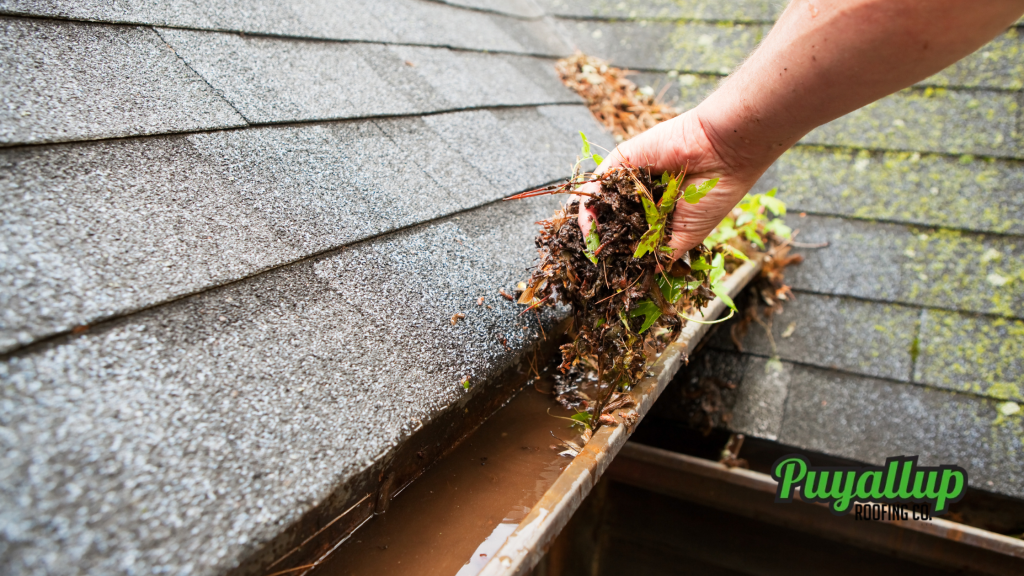
A thorough gutter cleaning can remove leaves, needles, roof granules, and other buildup that blocks outlets or prevents water from moving toward the downspouts. Cleaning also gives you an opportunity to spot loose sections or developing leaks before they become larger problems.
What Does Professional Gutter Installation Involve?
Professional gutter installation starts with understanding the roof, not simply attaching material along the edge.
Measuring the Roofline and Drainage Load
The roof shape, length of each run, slopes, valleys, and locations where water concentrates all influence the design. Large roof sections may need different drainage planning than a small, simple roofline.
The installation should account for how much rain reaches each section and where that water naturally collects.
Planning Downspout Locations
Downspouts need to handle runoff without sending it toward an area where water can collect beside the home.
Existing grading, walkways, landscaping, driveways, and drainage connections should all be considered. A well-positioned downspout helps move water away rather than simply transferring the problem from the roof to the ground.
Selecting the Material and Profile
Residential gutter systems are available in several materials and styles. Aluminum is widely used because it balances durability, appearance, and maintenance needs. Copper can offer a distinctive appearance and long service life but comes at a higher initial cost.
The right option depends on the home rather than simply choosing the most expensive material.
Completing the Gutter Install
During a new gutter install, sections are fitted to the roofline, properly supported, pitched for drainage, and connected to the planned downspouts.
The completed installation should move water predictably without unnecessary low points, leaks, or sections that hold standing water.
Do Gutter Guards Make Sense in Orting?
Gutter guards can be useful for properties where leaves, needles, and other debris regularly enter the system, but they are not a substitute for occasional inspection.
Homes near mature trees may benefit more than properties with little overhead debris. The right approach depends on the surrounding landscape and how often buildup becomes a problem.
For some homeowners, Orting gutters with guards can reduce routine cleaning. For others, a well-designed open system with periodic maintenance may be enough.
What Should Orting Homeowners Check Before Choosing a Gutter System?
The best gutter system is one that fits the roof and property rather than one loaded with unnecessary upgrades.
Check How Water Leaves the Property
A gutter can perform perfectly along the roofline and still create problems if the downspout releases water in the wrong location.
Look at where water will travel after it reaches the ground. Low areas, slopes toward the foundation, tight side yards, and existing drainage features can all affect the plan.
Look at the Fascia Before Installation
Gutters depend on the roof edge and fascia for secure attachment. If the underlying material is soft, deteriorated, or damaged, that issue may need attention before installing a new system.
Installing over damaged material can shorten the life of the work.
Think About Maintenance Honestly
Trees, roof shape, gutter height, and accessibility all influence how easy the system will be to maintain.
A homeowner with heavy tree coverage may value guards or easier cleaning access more than someone living on an open property.
Choosing a System Without Overcomplicating the Project
A homeowner does not need every available upgrade to get dependable drainage.
The important questions are straightforward: Is water moving efficiently? Are the materials in good condition? Are the downspouts located correctly? Is runoff being moved away from vulnerable areas?
Puyallup Roofing takes a practical, no-pressure approach to those decisions. If your current system can continue doing its job with a sensible correction, replacement does not need to be the first answer. When a new system provides the better long-term solution, the reasons should be clear before work begins.
Talk With Puyallup Roofing About Your Orting Gutters
If your system is overflowing, leaking, pulling away, or simply ready for an upgrade, get in touch with Puyallup Roofing to discuss the property and schedule an estimate.
We serve Orting and communities throughout the South Sound and Western Washington, including Puyallup, Graham, Bonney Lake, Sumner, Enumclaw, Tacoma, and surrounding Pierce County areas.
Frequently Asked Questions
How Much Does Gutter Installation Cost in Orting?
Cost depends on the amount of material needed, home height, roofline complexity, downspout requirements, material choice, and access.
An on-site estimate is more reliable than a generic price because two similarly sized homes can require very different layouts.
How Long Does Gutter Installation Usually Take?
Many residential projects can be completed relatively quickly, but timing depends on the size and complexity of the home.
Removal of an old system, fascia issues, difficult access, or complex drainage planning can extend the work.
Should Gutters Be Replaced When the Roof Is Replaced?
Not automatically. They should be inspected during roof replacement, but a functional gutter system in good condition may not need replacement.
Coordinating both projects can make sense when the existing system is already damaged or nearing the end of its useful life.
How Often Should Gutters Be Checked in Orting?
They should be inspected regularly and after periods of heavy debris buildup or severe weather.
Homes surrounded by trees may need attention more often because leaves and needles can block outlets faster.
Are Gutter Guards Worth Installing?
They can be worthwhile when debris repeatedly causes clogs, especially around mature trees.
They reduce the amount of material entering the system, but periodic inspection is still important.
Can Water From the Downspouts Drain Anywhere on the Property?
No. The discharge location should move water away from the structure without creating erosion, pooling, or drainage problems elsewhere.
Property grading and the existing stormwater setup should be considered when deciding where runoff should go.
Is a Metal Roof Better Than Shingles?
What Is The Plural Of Roof?
How Long Should a Roof Last?
How to Remove Moss From Roof?